

Talking to Elderly Parents About Driving
Balancing Independence, Safety, and Illinois’s New Road Safety and Fairness Act
Talking to elderly parents about driving is probably one of the hardest topics of conversation I have with families.
For many older adults, driving isn’t just about getting from Point A to Point B. It represents independence, freedom, and control over their own lives. That’s why talking to elderly parents about driving can become one of the most emotional conversations a family will ever have.
I don’t think the real question is, “When should someone stop driving?”
I think the better question is, “When does protecting someone’s independence become a safety concern, for them and for everyone else on the road?”
There isn’t an easy answer. If someone still has the capacity to make their own decisions, we generally can’t just decide they shouldn’t drive because we’re worried. At the same time, waiting until something bad happens isn’t the answer either. When it comes to talking to elderly parents about driving, timing matters as much as the words you use.
The Driving Dilemma
Very often, families reach out to me to help them figure out how to take the keys away from their mom or dad because they are worried about safety. Sometimes they come up with very creative ways to do it; sometimes it works, and other times it doesn’t.
One family hid their dad’s car keys. He had the car towed to the dealership and had a new key made.
Another family disconnected the motor, so their mom couldn’t drive. She assumed the car needed repairs and didn’t want to spend the money to fix it, so she simply sat in the car every now and then just to “hang out.”
A daughter shared with me the scary story of having to drive to Indiana to pick up her dad, who had gotten lost, ended up on the interstate, and ran out of gas.
My Story: Talking to Elderly Parents About Driving
This isn’t just something I’ve experienced professionally. I have had to talk to both my parents about driving, and believe me, it wasn’t easy
My dad was starting to miss stop signs, take wrong turns and forget to use his turn signal. I asked his doctor to order a “driving evaluation” for him because I was worried about his safety and others. Unfortunately, the driving evaluation never happened. My dad was reluctant to go, and when he finally let me take him, he fell in the parking lot, scraped his elbow and refused to go through with the test. Needless to say, he blamed me for making him go in the first place.
My mom’s last day driving was when she forgot to take the gas pump out of the car and started driving off. Thank goodness, there were others around who saw what was happening and got her to stop the car. Luckily, she had the sense to stop driving on her own after that incident.
Every family has a different story, but they all have one thing in common. Most of them wish they had started the conversation sooner.
My Guiding Principle for Talking About Driving
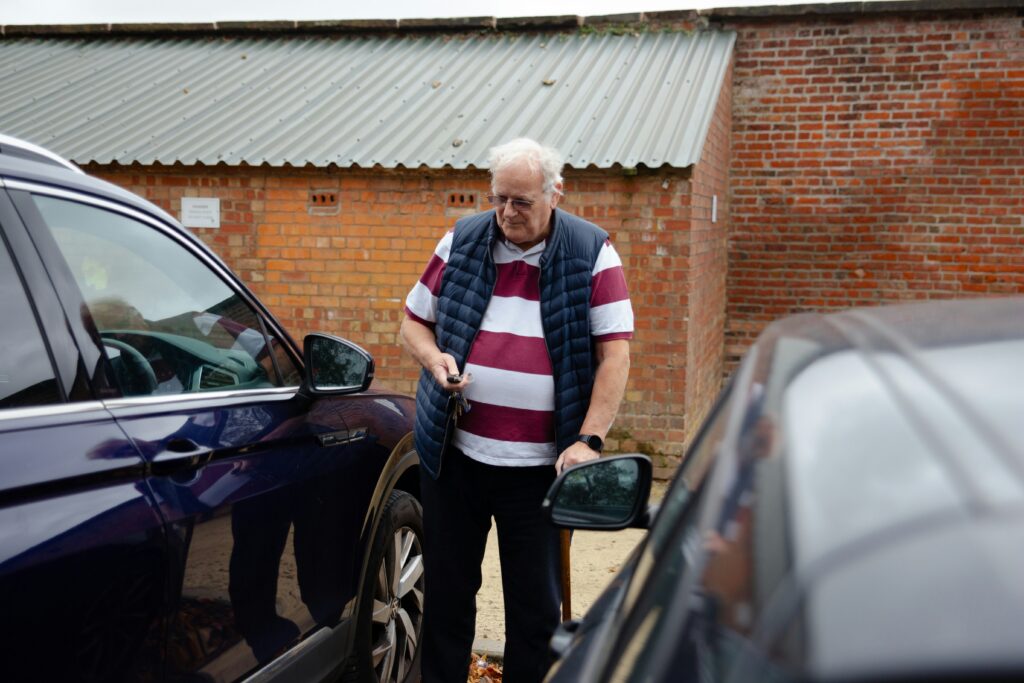
If you are no longer comfortable sitting in the passenger seat while your elderly loved one is driving, it’s probably time to start having the conversation. Don’t wait for a crisis.
The conversation about driving is almost never just about driving. It’s about safety, independence, dignity, and protecting the people we love. Starting the conversation early gives everyone more options and often leads to better outcomes than waiting until an accident or emergency forces the decision.
Common Questions Families Ask
If I’m my loved one’s power of attorney, can I be held responsible if they cause an accident?
Generally, no. Simply serving as someone’s power of attorney does not automatically make you legally responsible if they are involved in a car accident. A power of attorney gives you authority to act on another person’s behalf in certain situations, but it does not automatically give you the authority to take away their driver’s license or force them to stop driving. Serving as a power of attorney is a significant responsibility, and the person appointed to this role must feel comfortable fulfilling these duties. If a power of attorney is no longer able or willing to serve, they have the right to resign. Most power of attorney documents name a successor agent who can step into the role. If no successor has been named, additional legal planning may be necessary.
That said, if you know your loved one is no longer driving safely, don’t ignore it. Document your concerns, involve their physician, discuss a driving evaluation, and explore safer transportation options. If you’re unsure of your responsibilities, an elder law attorney can help you understand your state’s laws.
What if my loved one has dementia or another cognitive impairment and continues driving?
This is one of the hardest situations families face.
A diagnosis of dementia does not automatically mean someone must stop driving. In the early stages, many people can continue driving safely. However, as the disease progresses, judgment, reaction time, problem-solving, and memory can all be affected.
If you’re noticing near misses, getting lost, new dents in the car, confusion while driving, or increased anxiety behind the wheel, it’s time to have the conversation. Don’t wait for an accident to make the decision for you. 
Can I legally take away the keys or stop them from driving?
It depends.
If your loved one still has the legal capacity to make their own decisions, you generally cannot force them to stop driving simply because you’re concerned. That is why involving their physician, considering a professional driving evaluation, and having honest conversations early are so important.
In some situations, families may decide to limit access to the vehicle, but every situation is different, especially when cognitive impairment is involved.
Will auto insurance still provide coverage if my loved one is driving unsafely?
Driving concerns alone do not automatically cancel insurance coverage.
Whether an insurance company pays a claim depends on many factors, including whether the policy was active, whether the driver was covered under the policy, and the terms of the insurance contract.
However, if someone’s driver’s license has been suspended or revoked and they continue to drive, insurance issues can become much more complicated. Every policy is different, so families should review their coverage and ask questions before a problem arises.

The Good News
One thing I’ve learned is that many older adults eventually recognize it themselves. They start avoiding nighttime driving. They stop driving on the expressway. They only drive short distances. And eventually, many decide it’s time to stop altogether.
Today, giving up driving doesn’t mean giving up independence.
Between family support, senior transportation programs, PACE for Riders with Disabilities, ride-share services like GoGo Grandparent and GoGo Start, and transportation offered through many senior living communities, there are more options than ever before.
The Illinois Road Safety and Fairness Act (HB 1226), Effective July 1, 2026
For many years, Illinois had one of the most unique requirements in the country when it came to older drivers. The new law moves away from an age-based system and focuses more on an individual’s ability to drive safely.
The concern behind the previous law was understandable. As we age, changes in vision, reaction time, physical ability, and cognition can affect driving. The challenge was finding the right balance between keeping roads safe and not assuming someone is unsafe simply because of their age.
Previously, Illinois was known for requiring older drivers to complete road tests based on age alone. Supporters of HB 1226 argued that age by itself does not determine whether someone is a safe driver. Instead, factors such as health, vision, cognitive ability, and driving history give a fuller picture.
The Family Reporting Process
One of the biggest changes under HB 1226 is the creation of a process that allows certain family members to report concerns about a driver’s ability.
An immediate family member may report concerns if they believe a relative has a medical, physical, or cognitive condition that affects safe driving. The purpose of the report is not to automatically remove someone’s license. Instead, it allows the Secretary of State to review the concern and determine whether further evaluation is appropriate.
I think this change gives families another tool when they are struggling with a very difficult conversation.
The Illinois Medical Report
Another tool to help when driving is a concern is the Illinois Medical Report.
Under Illinois law, individuals who have a medical condition or take medications that may result in a loss of consciousness or otherwise impair their ability to operate a motor vehicle safely are responsible for notifying the Illinois Secretary of State by submitting a Medical Report.
Start by having an open conversation with your loved one and encourage them to talk with their healthcare provider about any medical or mental health conditions that could affect their driving.
My Final Thoughts
The conversation about driving is almost never about driving.
It’s about independence.
It’s about dignity.
It’s about safety.
It’s about families trying to do the right thing for someone they love.
My advice is always the same. Don’t wait for the accident. Start the conversation early, while your loved one can still be part of the decision.
Those conversations are never easy, but they are almost always easier than dealing with the consequences of waiting too long. If you are the family member noticing the near misses or the small changes, trust what you are seeing. You are not being overprotective; you are paying attention. And if you are the one your parent or spouse is going to push back against, that is okay too.
The goal of talking to elderly parents about driving isn’t to win the conversation. The goal is to keep them safe, keep them included in the decision, and protect your relationship with them at the same time. When we approach it as another way of walking alongside someone we love, it stops feeling like a confrontation and starts feeling like what it really is: one more part of showing up for them.