
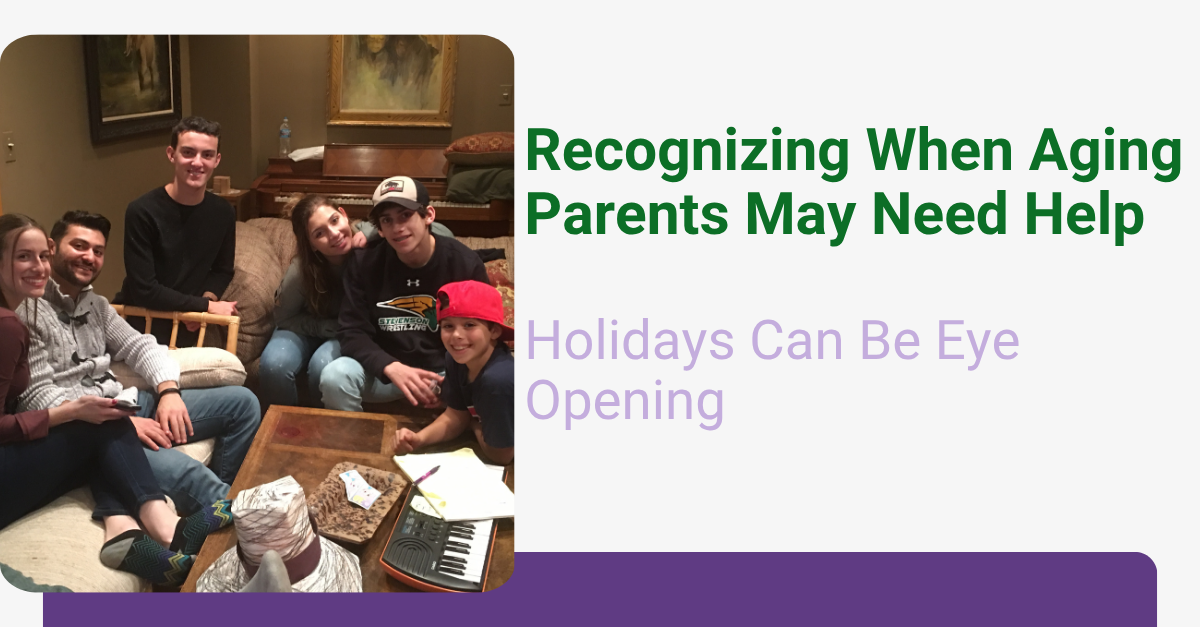
Recognizing when aging parents may need help often happens during the holidays, when families gather and notice changes in health or behavior.
Holidays Can Be Eye-Opening
The holidays often bring families together after months or even years apart. For me, these gatherings were always some of the happiest times of the year. With eight children, it was nearly impossible for all of us to be in one place, but with my mom’s encouragement, we always found a way. Those celebrations, filled with laughter, stories, and connection, became some of my most cherished memories.
Those memories have shaped not only how I celebrate the holidays but also how I support the families I work with. I’ve noticed a familiar pattern. Every year, shortly after the holidays, my phone starts ringing. Many of those calls come from adult children who have just returned from visiting their parents. During their time together, they noticed things that caught their attention, subtle changes in mobility, memory, or daily habits. Sometimes, it’s the first time they realize their parent may need more support.
These moments can be emotional. They can also be confusing or even overwhelming. The holidays are supposed to be joyful, yet they often reveal the quiet changes that happen when families live far apart. Navigating dementia and the holidays can feel overwhelming, and you don’t have to do it alone.

Why Families Often Notice Changes After the Holidays
When you see your aging loved ones every day, it can be easy to overlook gradual changes. But when you only see them a few times a year, those changes can seem sudden.
You might notice that your loved one:
- Moves more slowly or relies on furniture for balance
- Seems less engaged or more forgetful
- Has lost weight, appears disoriented, or repeats stories
- Avoids activities or social events they once enjoyed
These shifts don’t always mean something serious is happening, but they do deserve attention. Often, the holidays create space to truly see what day-to-day life looks like for your loved one.
Staying Connected After the Visit
What happens after you return home matters just as much as what you notice while you’re there. Staying connected throughout the year is one of the most important ways to support your aging loved one.
- Check in frequently. Don’t wait until the next holiday. A weekly video call or text can help you track subtle changes over time.
- Stay in touch with others. Reach out to neighbors, caregivers, or friends who see your loved one more often. They can provide valuable perspectives.
- Be gentle with your observations. Approach the topic with empathy. Change can feel uncomfortable, so focus on support, not judgment.
- Encourage engagement. Loneliness can affect both emotional and brain health. Help your loved one stay socially connected to others.
These small, consistent touchpoints make it easier to catch changes early and to respond before challenges become crises.
Practical Takeaways for Families Recognizing When Aging Parents May Need Help:
- Observe mobility and engagement. Are they getting out less or relying on others for help?
- Notice cognitive or mood shifts. Confusion, slower responses, or changes in energy can signal deeper issues.
- Look beyond physical appearance. Isolation or loss of interest in hobbies may suggest emotional or cognitive decline.
- Plan structured check-ins. Schedule regular visits or virtual “coffee chats” to stay connected between holidays.
- Start gentle conversations. Use simple, caring statements like, “I noticed you haven’t been driving much lately. How are you feeling about that?”
By staying observant and compassionate, families can provide meaningful support while respecting independence and dignity.
A Season for Connection and Clarity
The holidays remind us what truly matters — love, family, and connection. They also offer an opportunity to notice, reflect, and begin important conversations about aging and care.
Change is inevitable, but it does not have to be faced alone. Taking time to check in, to listen, and to act with empathy can help ensure your loved one continues to live with safety, comfort, and peace of mind.
If you’ve recently noticed changes in your loved one after the holidays, you’re not alone. We provide compassionate guidance to help families navigate aging, dementia, and care planning with confidence.