
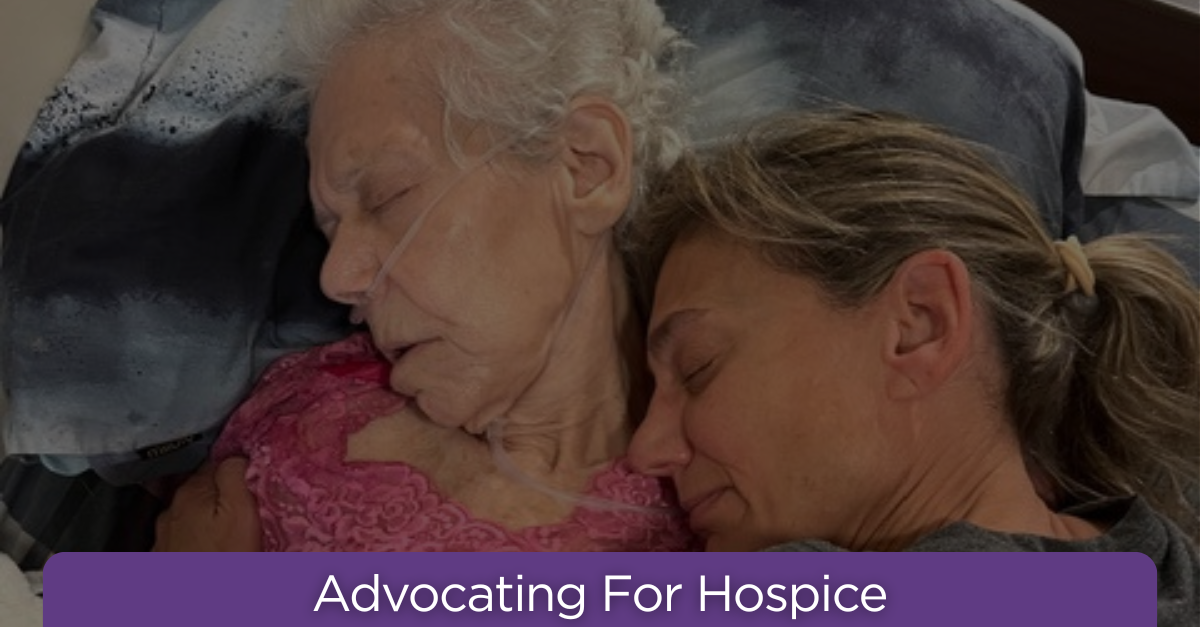
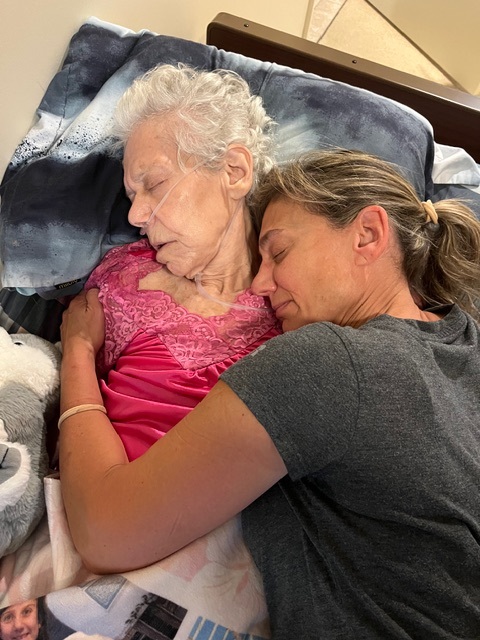
When my mom was in the hospital during her final days, I faced one of the hardest moments of caregiving. It was painfully obvious to me that she was uncomfortable and agitated, showing behaviors that clearly indicated she was in pain and distress. But to the doctor, her inability to communicate made this less clear and he wasn’t comfortable in prescribing her medication to relax her behavioral symptoms because of the concerning side effects that can occur including increased lethargy and disorientation.
I completely understand his concerns and in general, I always discourage use of anti-anxiety or antipsychotic medications in people with dementia. However, my mom was in a stage of her disease that I believed keeping her comfortable was more important than keeping her alert.
I had to advocate on behalf of my mom by explaining to the doctor my viewpoint and my mom’s wishes to be without distress. He finally agreed to change the medical approach from recovery care to comfort care. Once he formally did that, he was able to prescribe the medication that she needed to calm her down and give her some much-needed rest. That moment defined the shift in thinking how we as a family were going to approach my mom’s care moving forward. I requested the doctor to complete the needed medical treatment in the hospital, send her home to a more comfortable environment, and start hospice care.
Why Advocating for Hospice Can Be So Difficult in Dementia Care
Knowing when to involve hospice for someone with dementia is incredibly challenging. Dementia progresses slowly and unpredictably. Unlike many other terminal illnesses, there is often no clear moment when it becomes obvious that the end is near.
Some individuals live for years in advanced stages, while others decline more suddenly. Families may struggle to recognize when hospice is appropriate because changes are often gradual. Decreased appetite, repeated infections, increased confusion, or agitation can be mistaken for part of the normal progression of dementia.
For my mom, it was a combination of multiple infections, increased agitation, and her inability to communicate her discomfort that signaled it was time. Once hospice care was in place, the sense of relief was overwhelming.
Hospice provided guidance on managing her symptoms, taught our family how to care for her, and gave us the emotional support we desperately needed. Instead of constantly worrying about medical decisions, we were able to focus on being present with her during her final days. This is why advocating for hospice matters so deeply.
Why Hospice Matters
Hospice care focuses on comfort, dignity, and support for both the patient and the family. Hospice can help by:
- Managing pain and symptoms to ensure comfort
- Providing emotional and spiritual support for patients and families
- Guiding caregivers with daily care, mobility, and feeding
- Helping manage medications
- Offering respite for family caregivers
- Providing bereavement support after a loved one passes
Understanding Comfort Care, Palliative Care, and Hospice
These terms are often used interchangeably, but they are not the same. Understanding the differences helps families ask better questions, make clearer decisions, and advocate with confidence.
Palliative care is a medical program focused on comfort alongside treatment. It can be provided at any stage of a serious illness, even early on, and can be offered while a person is still pursuing curative or life-prolonging care. Palliative specialists help manage symptoms like pain, anxiety, nausea, fatigue, and shortness of breath while also supporting the family emotionally.
Hospice care is a specific program focused on comfort instead of treatment. A physician must certify that the individual likely has six months or less to live if the illness follows its expected course. Hospice shifts the goal away from aggressive medical intervention and toward dignity, comfort, and quality of life. Hospice is most often provided at home, but it can also be provided in nursing facilities, assisted living, or hospice centers, and it includes strong support for both the person and their family.
Comfort care is not a program; it is an approach or goal of care. It means the medical team is focusing on comfort only: relieving pain and distress while avoiding invasive or aggressive treatments. In hospitals, you may hear terms like “comfort measures only.” Comfort care can be provided in many settings and may occur with or without hospice, depending on the situation.
In simple terms:
- Palliative care = comfort alongside treatment
- Hospice = comfort instead of treatment (near the end of life)
- Comfort care = a decision to focus only on comfort (not a program)
Because hospice is not always automatically offered or explained, families often need to initiate the conversation. Asking directly about hospice or comfort-focused options can help ensure care aligns with your loved one’s needs, values, and quality of life.
What Hospice Can Help With
Hospice provides comprehensive support, including:
- Pain and symptom management to reduce suffering from infections, agitation, or other complications
- Emotional and spiritual support for both the patient and family
- Practical caregiving guidance for feeding, mobility, hygiene, and daily needs
- Medication management to keep your loved one comfortable
- Respite for caregivers so families can rest while knowing their loved one is cared for
- Bereavement support after your loved one passes
How to Know if Hospice Is the Right Step
Hospice is generally considered when a physician determines that a patient has a life expectancy of six months or less if the disease follows its expected course. For individuals with dementia, this may include:
- Difficulty eating or drinking, or unintended weight loss
- Repeated infections or medical complications
- Declining mobility or frequent falls
- Increased confusion, agitation, or fatigue
- A decision to stop pursuing aggressive medical interventions
Getting a Hospice Assessment
If you believe hospice may be appropriate, here are steps you can take:
- Talk with your loved one’s doctor or primary care provider
- Contact a hospice provider directly to request an assessment
- Have an evaluation by a hospice nurse or physician
- Establish a personalized plan of care focused on comfort and support
Accepting hospice was one of the best decisions we made. Planning ahead, recognizing the signs, and understanding the process can make a profound difference. Advocating for hospice helped ensure my mom passed with dignity, comfort, and compassion, and it gave our family the guidance and support we needed during an incredibly difficult time.